


Why Teams Rescan Past Sites with Vertex Adroit


منذ 10 ساعات 35 دقائق #8891
بواسطة Bluehawk
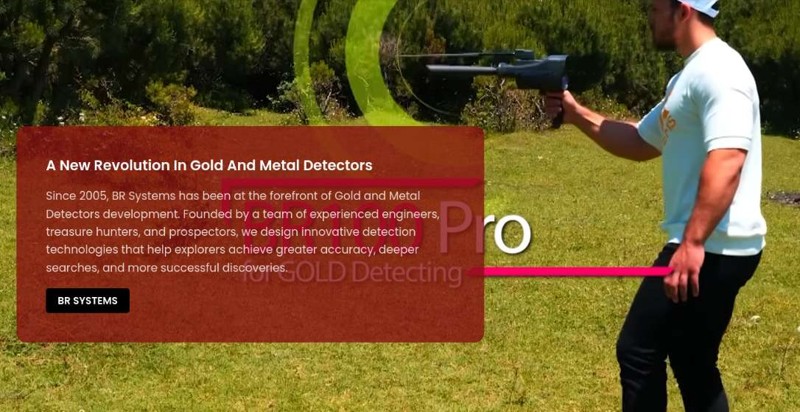
Vertex Adroit has become a favorite among field teams because its long range gold detectors and multi-system sensors let crews revisit old archaeological sites and read them with fresh eyes. Modern platforms combine long-range scanning, 3D ground imaging, and geophysical analysis to reinterpret ground that was searched decades ago.
That is why crews keep returning to the same dig zones: earlier passes missed deep targets, and intelligent target interpretation now separates gold, cavities, and bedrock with far greater confidence.
Why Old Sites Deserve a Second Scan
Earlier expeditions often worked with limited depth and crude discrimination. Today's advanced exploration systems reach deeper, filter mineralization better, and map targets in three dimensions, so a site scanned in the 1990s can yield completely new results with modern equipment.
Teams comparing field notes routinely find that previously 'empty' plots contain cavities or metallic clusters invisible to older single-frequency machines.
Vertex Adroit in the Field
The Vertex Adroit pairs extended forward search range with intelligent target interpretation, making it ideal for large archaeological zones where walking every meter is impractical. Operators can sweep wide corridors, then narrow down with 3D imaging before breaking ground.
For teams sourcing equipment, our long range gold detectors collection and multi system detectors lineup cover platforms built specifically for this kind of repeat survey work.
Comparing Rescan Results Across Systems
Crews often cross-check the Vertex Adroit against complementary tools. Imaging gold detectors provide vertical profiling, while geophysical detectors add resistivity and magnetometry context, confirming whether an anomaly is cultural, mineral, or void.
When a long-range signal and a 3D anomaly align on the same coordinate, confidence in excavation rises sharply — and budgets are spent where evidence is strongest.
Rescanning old archaeological sites is no longer redundant work; it is a cost-effective strategy powered by better sensors and smarter interpretation. With Vertex Adroit-class platforms and the right supporting systems, field professionals can unlock targets that earlier generations simply could not see.
#gold_detector #gold_detectors #metal_detector #metal_detectors #gold_step_pro_max #br_systems #gold_detectors #br_detector #br_950_water_detector #br_detectors #gold_step_pro_max_price #br_system #br_gold_step_pro_max #br_50_target_max #br_100_pro_gold_detector #ajax_gamma
تم إنشاء Why Teams Rescan Past Sites with Vertex Adroit بواسطة Bluehawk
Vertex Adroit has become a favorite among field teams because its long range gold detectors and multi-system sensors let crews revisit old archaeological sites and read them with fresh eyes. Modern platforms combine long-range scanning, 3D ground imaging, and geophysical analysis to reinterpret ground that was searched decades ago.
That is why crews keep returning to the same dig zones: earlier passes missed deep targets, and intelligent target interpretation now separates gold, cavities, and bedrock with far greater confidence.
Why Old Sites Deserve a Second Scan
Earlier expeditions often worked with limited depth and crude discrimination. Today's advanced exploration systems reach deeper, filter mineralization better, and map targets in three dimensions, so a site scanned in the 1990s can yield completely new results with modern equipment.
Teams comparing field notes routinely find that previously 'empty' plots contain cavities or metallic clusters invisible to older single-frequency machines.
Vertex Adroit in the Field
The Vertex Adroit pairs extended forward search range with intelligent target interpretation, making it ideal for large archaeological zones where walking every meter is impractical. Operators can sweep wide corridors, then narrow down with 3D imaging before breaking ground.
For teams sourcing equipment, our long range gold detectors collection and multi system detectors lineup cover platforms built specifically for this kind of repeat survey work.
Comparing Rescan Results Across Systems
Crews often cross-check the Vertex Adroit against complementary tools. Imaging gold detectors provide vertical profiling, while geophysical detectors add resistivity and magnetometry context, confirming whether an anomaly is cultural, mineral, or void.
When a long-range signal and a 3D anomaly align on the same coordinate, confidence in excavation rises sharply — and budgets are spent where evidence is strongest.
Rescanning old archaeological sites is no longer redundant work; it is a cost-effective strategy powered by better sensors and smarter interpretation. With Vertex Adroit-class platforms and the right supporting systems, field professionals can unlock targets that earlier generations simply could not see.
#gold_detector #gold_detectors #metal_detector #metal_detectors #gold_step_pro_max #br_systems #gold_detectors #br_detector #br_950_water_detector #br_detectors #gold_step_pro_max_price #br_system #br_gold_step_pro_max #br_50_target_max #br_100_pro_gold_detector #ajax_gamma
يرجى تسجيل الدخول أو إنشاء حساب للانضمام إلى النقاش.
زمن إنشاء الصفحة: 0.102 ثانية


